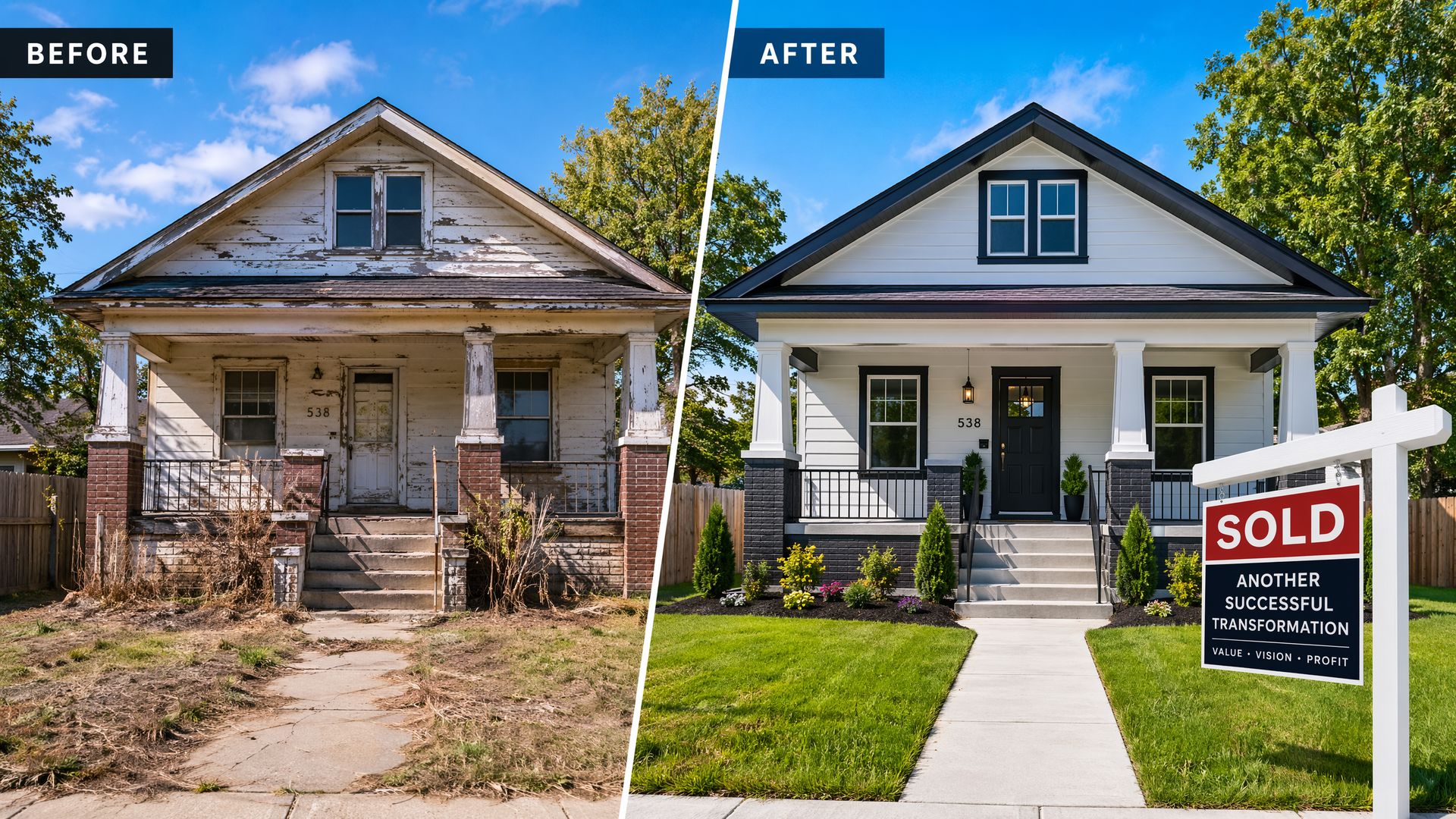
Not all leverage is designed for the long haul. For investors who want to generate significant profits in 6–18 months, short-term leverage through hard money loans is one of the most powerful tools in the real estate toolkit. Fix-and-flip investing has produced extraordinary returns for those who understand how to use borrowed capital to transform distressed properties into profitable assets.
The Fix-and-Flip Leverage Model
The fix-and-flip model uses short-term leverage to acquire and renovate a distressed property, then sell it at a profit. The key is that the lender finances both the purchase price and a portion of the renovation costs, allowing the investor to control a $200,000+ project with as little as $20,000–$40,000 of their own capital.
| Deal Component | Amount |
|---|---|
| Purchase Price | $150,000 |
| Renovation Budget | $50,000 |
| Total Project Cost | $200,000 |
| Hard Money Loan (90% of purchase + rehab) | $180,000 |
| Investor’s Cash In (10%) | $20,000 |
| After-Repair Value (ARV) | $320,000 |
| Sale Price (after agent fees ~6%) | $300,800 |
| Loan Payoff + Interest (6 months @ 12%) | $190,800 |
| Net Profit | ~$90,000 |
| ROI on $20,000 Cash Invested | ~450% |
This is the power of short-term leverage. The investor turned a $20,000 investment into a $90,000 profit in six months — a return that would be virtually impossible without the leverage provided by the hard money loan.
The BRRRR Strategy: Leverage That Never Stops Working
The BRRRR method — Buy, Rehab, Rent, Refinance, Repeat — is the most celebrated leverage strategy in modern real estate investing. It combines short-term hard money leverage with long-term rental ownership, allowing investors to recycle their capital indefinitely.
The BRRRR strategy’s genius lies in the refinance step. After renovating and renting the property, the investor refinances at the new, higher appraised value — often pulling out most or all of their original cash investment. That capital then funds the next deal, creating a self-sustaining wealth engine.
Hard Money vs. Traditional Financing: A Comparison
| Feature | Hard Money Loan | Conventional Mortgage |
|---|---|---|
| Approval Basis | Property value / ARV | Borrower creditworthiness |
| Closing Time | 3–10 days | 30–60 days |
| Interest Rate | 8–14% | 6–8% |
| Loan Term | 6–24 months | 15–30 years |
| Best For | Fix-and-flip, BRRRR | Long-term buy-and-hold |
| Down Payment | 10–20% of ARV | 20–25% of purchase price |
★ Key Takeaways — Part 3
- Hard money loans allow investors to control large renovation projects with minimal personal capital.
- The fix-and-flip model can generate extraordinary short-term ROI when deals are sourced and executed correctly.
- The BRRRR strategy combines short-term and long-term leverage to build a portfolio without constantly needing new capital.
- Hard money is a tool — not a crutch. Always ensure your ARV projections are conservative and your renovation budget includes a contingency buffer.