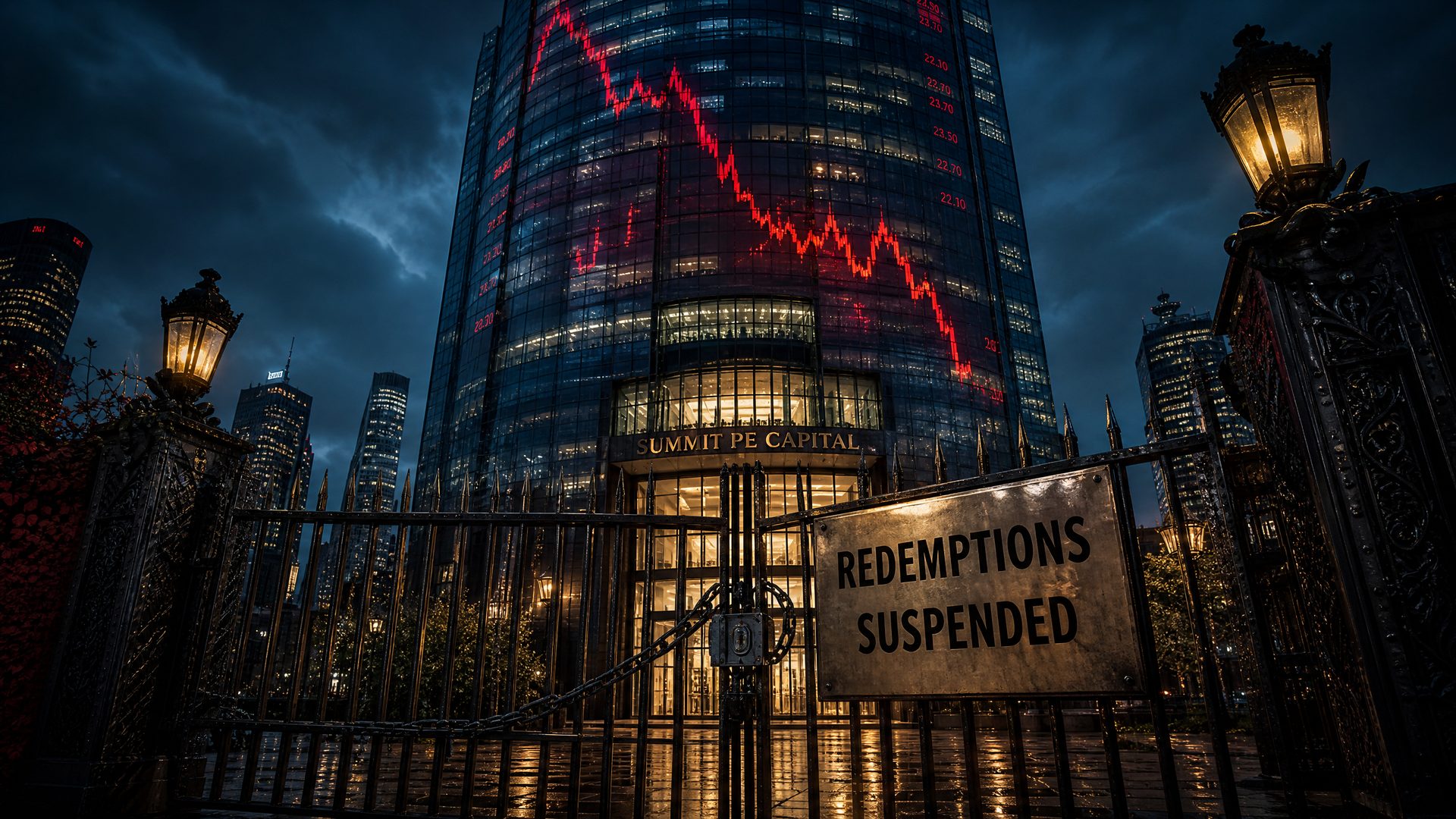
The Private Credit Timebomb
A $3 trillion shadow lending market has stepped in where banks pulled back — but private credit comes with its own set of risks that most investors don’t understand.
As traditional banks pulled back from commercial real estate lending in response to rising rates and regulatory pressure, a $3 trillion shadow lending market stepped into the void. Private credit — direct lending by non-bank entities including private equity funds, business development companies (BDCs), and family offices — has grown from $2 trillion in 2020 to $3 trillion at the start of 2025, according to Morgan Stanley. This market operates largely outside traditional banking regulation, with less transparency and fewer safeguards. And it is deeply exposed to the same distressed commercial real estate that banks are trying to offload.
What Is Private Credit?
Private credit refers to debt financing provided by non-bank lenders — entities that are not subject to the same capital requirements, regulatory oversight, or public disclosure obligations as commercial banks. In the commercial real estate context, private credit lenders provide bridge loans, mezzanine financing, preferred equity, and construction loans to borrowers who cannot access traditional bank financing — either because the deal is too risky, the borrower’s credit is impaired, or the loan-to-value ratio is too high for bank underwriting standards.
The appeal for borrowers is flexibility and speed. The appeal for lenders is yield — private credit CRE loans typically carry interest rates 200–400 basis points above comparable bank loans. The risk is that these loans are made to borrowers and on properties that banks have already declined, meaning the underlying credit quality is lower and the loss severity in a default scenario is higher.
The Interconnection Risk
🎯 Key Takeaways — Part 8
- The private credit market has grown from $2 trillion in 2020 to $3 trillion in 2025 — a 50% increase in five years.
- Private credit now holds approximately 14% of the CRE lending market, up from 7–8% in 2017.
- Large banks have $345 billion in indirect CRE exposure via REITs — hidden risk not visible in direct loan portfolios.
- Private credit operates outside traditional banking regulation with less transparency and fewer safeguards.
- A liquidity crisis in private credit could cascade into the broader CRE market, amplifying distress.