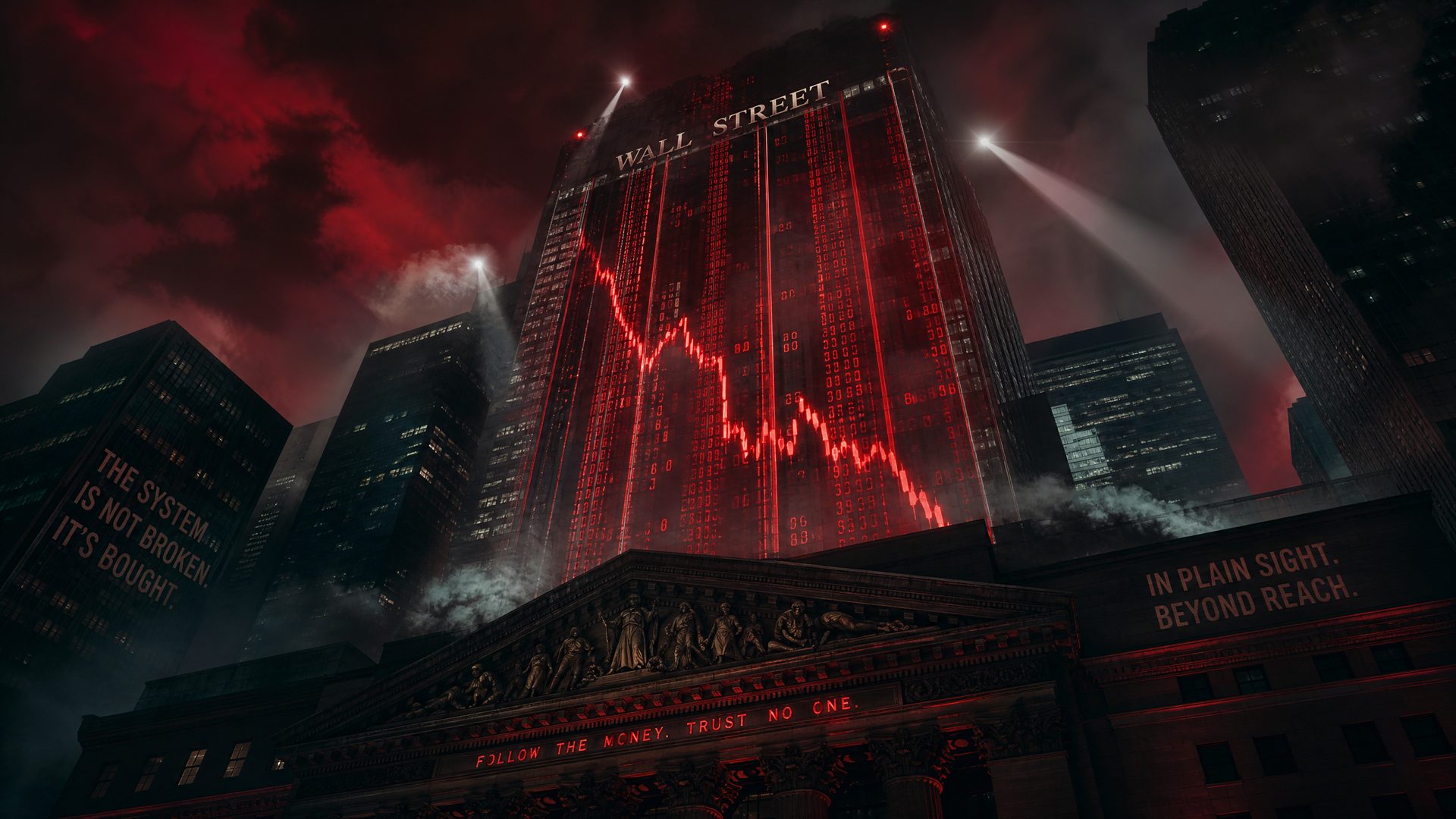
The 5 Trillion Dollar Shell Game
The largest institutional real estate deception in modern history — and why most investors are the last to know.
There is a $5.8 trillion commercial real estate market in the United States. Banks hold more than half of it. And according to the Federal Reserve Bank of New York, a significant portion of that debt is built on a foundation that has been quietly crumbling since 2022 — extended, modified, and reclassified to avoid the appearance of distress. This is the story of how institutional players game the system, and why Property Pals Insiders need to understand it before the music stops.
The Scale of the Problem
The U.S. commercial real estate market totals approximately $5.8 trillion as of Q4 2023, with banks holding roughly 50.7% of that exposure, according to Federal Reserve Staff Report 1130 published in 2024. That means American banks are sitting on nearly $3 trillion in commercial real estate loans — office towers, retail centers, apartment complexes, and industrial parks — many of which were originated during the zero-interest-rate era and are now struggling to refinance in a 5%+ rate environment.
The problem is not just the size of the market. It is the opacity. Unlike residential mortgages, which are heavily regulated and publicly tracked, commercial real estate debt is largely invisible to the average investor. Institutional players — major private equity firms, non-traded REITs, and shadow lenders — have developed sophisticated tools to delay, obscure, and transfer the recognition of losses. The result is a system that looks stable on paper while quietly accumulating stress beneath the surface.
Three Mechanisms of Institutional Deception
Why This Matters to You
If you are a retail investor, a small landlord, or someone looking to build wealth through real estate, understanding this dynamic is not optional — it is essential. The institutions that control the narrative are also the ones who will offload distressed assets onto the market when their strategies finally fail. The informed investor who understands what is coming can position themselves to acquire real income-producing assets at significant discounts. The uninformed investor becomes the exit liquidity.
Over the next 11 parts of this series, we will break down every layer of this shell game — from the zero-interest-rate binge that created the problem, to the extend-and-pretend playbook, to the private credit timebomb, to the exact strategies you can use to position yourself on the right side of what comes next.
🎯 Key Takeaways — Part 1
- The U.S. CRE market is a $5.8 trillion system, with banks holding over half the exposure.
- Institutional players use extend-and-pretend, redemption gates, and continuation funds to delay loss recognition.
- The NY Fed has formally documented that this behavior creates financial fragility and credit misallocation.
- Approximately $2 trillion in CRE debt matures between 2024 and 2026 — the pressure is building.
- Informed investors who understand the mechanics can position to buy distressed assets at a discount.